Choosing andamios is never a minor purchasing decision. On a serious construction site, the scaffold system affects how crews move, how materials are handled, how safely work progresses, and how reliably the slab support system performs under load. That becomes even more important when the project involves a careful diseño de cimbra para losa, where access, stability, and load transfer must work together instead of being treated as separate tasks.
Why the choice of andamios matters more than many teams expect
Many contractors first think of andamios as temporary access equipment, but on slab-related work they often play a broader role. Depending on the configuration, they can support formwork operations, create safe working levels for carpenters and steel fixers, and help maintain orderly sequencing during pours, stripping, and re-shoring. A poor match between the scaffold system and the project conditions can slow work, complicate supervision, and introduce unnecessary risk.
Structural support and work rhythm
Even when the primary structural duty belongs to a dedicated shoring layout, the surrounding andamios influence how effectively that support can be installed and monitored. Crews need enough room to brace, level, plumb, and inspect components. If the scaffold system is awkward to adapt to beam drops, slab edges, stairs, or irregular bays, progress becomes uneven and quality often suffers.
The hidden cost of the wrong fit
The wrong system rarely fails all at once; more often, it creates friction everywhere. Workers lose time adjusting pieces that do not align well with the slab geometry. Material flow becomes messy. Inspections take longer because access is poor. Temporary modifications appear on site to solve problems the original selection should have prevented. Over the life of a project, those inefficiencies can matter as much as the initial rental or purchase price.
Define the project demands before selecting equipment
The best scaffold decision starts long before the first frame or ledger arrives on site. Teams should define what the project truly requires, not simply repeat the system used on the previous job. Slab work varies widely, and the right choice depends on geometry, loads, sequence, and site constraints.
Height, spans, and expected loads
Projects with modest slab heights and regular bays may work well with conventional frame-based systems, while taller interiors or heavier support demands often benefit from modular arrangements or shoring towers designed for greater capacity and flexibility. The dead load of formwork, the fresh concrete load, construction live loads, and the equipment used during placement all need to be considered together. Selection should reflect the actual support strategy, not assumptions.
Slab geometry and pour sequence
A flat, repetitive floor plate is one thing; a slab with drop panels, perimeter setbacks, openings, cantilevered areas, or frequent beam intersections is another. Complex geometry usually demands systems that can be adjusted without forcing unsafe improvisation. The pour sequence also matters. If the work is staged in zones, the scaffold and shoring system should allow efficient relocation, stripping, and re-use without disrupting the next phase.
Crew skill and assembly conditions
Some systems are faster to erect when crews are already trained in them, while others offer better adaptability but require stricter supervision. This is not just a labor issue; it is an engineering and operations issue. Equipment should suit the site team that will actually assemble, inspect, and use it, under the real conditions of the project.
Common types of andamios used on construction projects
No single scaffold system is ideal for every job. Understanding the main categories helps project teams avoid overbuilding where simplicity is enough, or under-specifying where capacity and adaptability are essential.
Frame scaffolding
Traditional frame scaffolding remains common because it is familiar, relatively straightforward, and often suitable for façade work, finishing access, and certain repetitive site conditions. It can be practical on projects with regular layouts and moderate heights. However, it is not always the best choice where slab support geometry is irregular or where tighter dimensional control is needed.
Modular systems
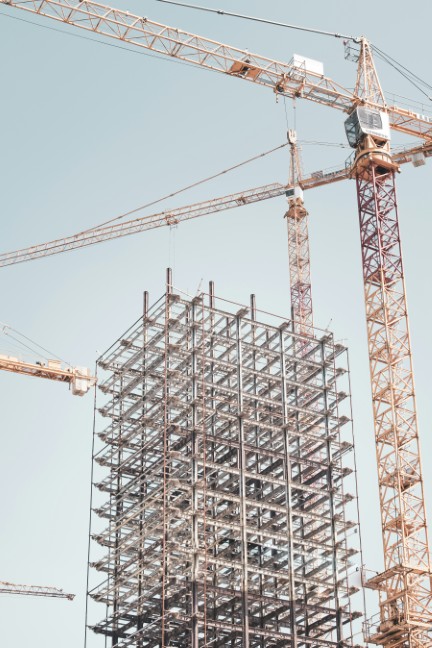
Modular andamios, including ring-based or cup-based configurations, are typically chosen when flexibility matters. Their components allow multiple connection points and more adaptable layouts around obstacles, uneven grids, and changing elevations. This can be especially useful on projects where access platforms and support functions must coexist in a coordinated way.
Shoring towers and heavy-duty support systems
When the job involves substantial vertical loads, greater heights, or demanding support conditions for slabs and beams, purpose-built shoring towers are often the more appropriate solution. These systems are not merely access platforms; they are part of the support strategy and should be selected with engineering input. Capacity, bracing, base conditions, and load paths must all be clearly understood before use.
How andamios connect to good diseño de cimbra para losa
Scaffolding and slab formwork are closely related on many jobs. The strongest results come when both are planned as part of one coherent temporary works strategy. That means the support equipment, work platforms, access routes, and stripping plan should complement the slab design rather than compete with it.
Load transfer, spacing, and compatibility
A sound support arrangement depends on how loads move from the slab formwork through joists, stringers, posts, frames, or towers and finally into the base. If those elements are mixed carelessly, the system becomes harder to inspect and easier to misuse. That is why many site managers review the support layout together with the diseño de cimbra para losa before approving pours, especially on slabs with openings, edge conditions, or changing thicknesses.
Bracing and stability under real site conditions
Temporary works do not fail on paper; they fail when real conditions are ignored. Lateral bracing, ties, locking points, level adjustment, and base bearing are all essential to stability. A system that looks adequate in a simplified sketch may behave very differently once workers begin moving materials, placing reinforcement, and pouring concrete in stages. Proper bracing should be part of the original plan, not a late addition.
Stripping and re-shoring strategy
The selection of andamios should also support what happens after the pour. If elements need to be stripped in sequence and re-shored below, the equipment must allow that process without damaging efficiency or safety. Systems that are quick to adapt and easy to inspect can significantly improve turnover between floors, especially on multi-level concrete work.
Site conditions that can change the best choice
Even a technically sound system can perform poorly if site conditions are not taken seriously. Ground conditions, access limits, storage areas, and surrounding constraints all influence what type of andamios will serve the project best.
Ground and bearing surfaces
Not every base is ready to receive scaffold loads. Some projects build from compacted soil, others from finished slabs, suspended decks, or partially completed structural zones. The bearing surface determines the need for base plates, sole boards, leveling methods, and load distribution measures. Ignoring base conditions is one of the fastest ways to create instability in otherwise capable equipment.
Access, storage, and material handling
A good system on paper can become inefficient if it is too bulky for the available storage area or too slow to move between work fronts. Tight urban sites, interior renovation work, and phased builds often reward modular systems that pack efficiently and adapt quickly. Open sites with simpler logistics may favor more conventional equipment if the layout is repetitive and predictable.
Urban constraints and weather exposure
Projects in dense areas often face limited staging space, delivery windows, traffic restrictions, and neighboring properties that reduce tolerance for disorder. Weather can also change the equation, particularly where wind exposure, rain, or prolonged damp conditions affect working surfaces and material handling. Selection should reflect the site the team actually has, not the site they wish they had.
Safety and supervision should shape the decision from the start
Safety is not a separate checklist completed after equipment arrives. It begins with choosing a system that can be assembled correctly, inspected consistently, and used as intended throughout the job. The more the site depends on improvised adjustments, the less reliable the safety culture tends to be.
Competent assembly and clear inspection routines
Every scaffold system should be erected under competent supervision and checked at the stages required by the project and local rules. Teams should know who is authorized to approve changes, who records inspections, and what conditions trigger re-inspection, such as relocation, impact, weather events, or changes in loading. The simplest way to improve compliance is often to select equipment that is easy to understand and hard to misuse.
Worker circulation and protected access
On slab projects, workers often need to move across several temporary levels while carrying tools, handling panels, or checking reinforcement. Safe access points, stable working platforms, edge protection, and uncluttered circulation routes are basic requirements, not premium extras. If the andamios do not support orderly movement, productivity and safety both decline.
- Check for complete components: missing pins, braces, or locking parts should never be treated as minor issues.
- Confirm base condition: settlement and out-of-level supports can affect the entire arrangement.
- Protect working edges: guardrails and toe boards matter where personnel or tools could fall.
- Control modifications: field changes should be reviewed, not improvised.
Renting versus buying: making the practical decision
The best commercial choice depends on project frequency, storage capacity, maintenance discipline, and the type of work a contractor handles most often. There is no universal answer, but there is a clear framework for deciding.
When renting is the smarter option
Rental is often the more efficient route for contractors with variable project sizes, irregular equipment needs, or limited yard space. It can also make sense when a specific job requires a system not commonly used by the company. Rental support can reduce idle inventory and allow the contractor to scale up or down according to the project cycle.
When ownership makes more sense
Buying becomes more attractive when a company repeatedly uses the same scaffold configuration, has the capacity to store and maintain it properly, and wants tighter control over availability. Ownership can be especially valuable for contractors whose core business depends on recurring slab, structural, or façade work with predictable system demands.
| Decision Factor | Renting | Buying |
|---|---|---|
| Project variety | Better for changing needs | Better for repeat work |
| Upfront cost | Lower initial commitment | Higher initial investment |
| Storage requirements | Reduced long-term storage burden | Requires yard space and control |
| Maintenance responsibility | Typically lighter for the contractor | Falls mainly on the owner |
| Availability control | Depends on supplier timing | Direct control if inventory is sufficient |
For builders looking for Fabricantes de Andamios and Andamios Renta en CDMX, working with a specialized local provider can simplify logistics and compatibility issues. Andamios Tlalpan is a relevant option when the project calls for practical support, local responsiveness, and equipment aligned with real construction conditions in Mexico City.
A practical checklist before you commit to a system
Before placing an order or approving a rental schedule, it helps to run through a disciplined review. The right questions usually prevent expensive adjustments later.
- Define the function clearly: Is the system mainly for access, for heavy support, or for both?
- Review the slab geometry: Identify openings, perimeter changes, beam intersections, and irregular spans.
- Confirm load requirements: Consider formwork, fresh concrete, workers, materials, and equipment.
- Check site constraints: Base condition, storage space, delivery access, and circulation routes all matter.
- Match the system to crew capability: Choose equipment that can be assembled and inspected correctly by the team on site.
- Plan for stripping and re-use: Think beyond the pour to the next working cycle.
- Verify component completeness: Compatibility and missing pieces are common sources of delay.
- Coordinate with supervision: Temporary works, safety review, and work sequencing should be aligned before erection begins.
Conclusion
Choosing the right andamios is not just about finding a system that reaches the required height. It is about selecting equipment that supports safe access, stable temporary works, efficient sequencing, and dependable field execution. When slab work is involved, the decision becomes even more important because the scaffold strategy and the diseño de cimbra para losa must operate as one coordinated system. Contractors who define project demands clearly, respect site conditions, and work with capable suppliers are far more likely to achieve smoother pours, cleaner inspections, and better overall project control.